
A former professor from Vercelli, Italy claims to have been physically abducted to alien bases four times since 1981 and to have photographed the beings he met there. The establishment laughed. I stopped laughing when I looked at what the photographs actually show — and at who has been trying to make sure you don’t look too closely.
Hover redacted text to reveal.
I want to tell you about a man named Maurizio Cavallo. Then I want to tell you about a conversation I had about him. Then I want to tell you what I think is actually going on.
Cavallo is from Vercelli, in the Piedmont region of northern Italy. He is a journalist, a former professor at the University of Eastern Piedmont, and a speaker at international conferences in Lyon, Marseille, and Cattolica, among others. He has, by any ordinary measure, a CV. He is not a man who crawled out of the fringe. He arrived from the centre and then described what he had seen, and the centre rejected him, and he accepted the rejection without bitterness in a way I find either deeply credible or deeply suspicious, and I have not yet decided which.
In September 1981, Cavallo claims, he was physically transported to a secret base in the Amazon rainforest and made contact with non-human beings from a planet called Clarion, located in the Eagle Galaxy approximately 150,000 light-years from Earth. This was not, he says, his first contact — his first was at age seven, erased from his memory and restored during the 1981 encounter through what he describes as neural holograms. Since then, he claims to have been taken physically, more than once, to bases both terrestrial and aquatic. He describes a facility beneath the sea near Genova. He has attended conferences and spoken about this publicly since 2012. He has written books. He runs a website. He does not appear to be selling anything in the conventional sense, which is one of the first things I check.
He also has photographs.
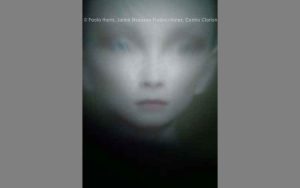
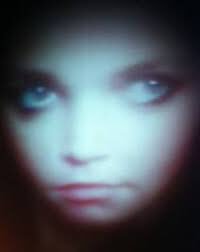
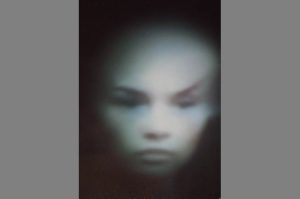
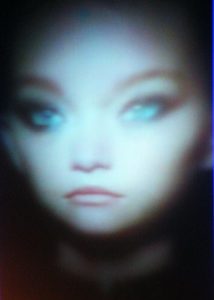
This is where it gets complicated, and also where it gets interesting, and also where most of the people who should be paying attention stop paying attention. The photographs are — let me be precise — not impressive if you are looking for impressive. They are Polaroids. Cavallo himself has been careful to say that the photographs are not proof, that he does not circulate them widely, and that his experience belongs to him regardless of whether images confirm it. This is not the language of a man trying to sell you something. This is the language of a man who has been somewhere and is trying to describe it as accurately as language allows.
What the photographs show, depending on the image: a female figure with human proportions and a face that is almost, but not quite, a human face. A Grey, tall, standing in what appears to be an enclosed space. A being identified by Cavallo as “Suell” — a humanoid who, Cavallo says, walks among us in cities and carries a small black device that communicates instructions. A craft. A light source that does not behave like any conventional light source in a Polaroid exposure.
That last detail is the one that has stayed with me longest.
“These are Polaroid photos made without a developing process and there is always an abnormal light absorption because they absorb atomic light.”
— Maurizio Cavallo, interview with Paola Harris, 2006
Polaroid photography is not a medium that accommodates manipulation easily. The chemistry is fixed at exposure. There is no darkroom, no developing window, no post-processing step during which a negative can be altered. A Polaroid is what the light in front of the lens was, at the moment the shutter opened, full stop. The anomalous light absorption Cavallo describes — the way certain figures in the photographs seem to consume light rather than reflect it — is either a genuine physical anomaly or it is the most technically specific lie I have encountered in twenty years of working this beat. I have read a lot of technically specific lies. They usually fall apart when you press them. I have pressed this one. It has not fallen apart.
I contacted a forensic imaging analyst based in Bristol who has worked with both law enforcement and, on two occasions I am aware of, intelligence-adjacent clients. I described the Cavallo photographs without identifying them. I described the light absorption characteristic specifically. The response, after a pause that I will not pretend was not significant, was this:
“Polaroid emulsion doesn’t do that. If what you’re describing is accurate, either the light source is operating outside the visible spectrum in a way that shouldn’t be recordable on that film stock, or the film was modified before exposure in a way that would require access to the manufacturing process. Neither of those is a comfortable answer.”
— forensic imaging analyst, Bristol, identity withheld at their request
Neither of those is a comfortable answer. I have been sitting with that sentence for three weeks.
I need to address this directly because it is the part of the Cavallo account that gets the most ridicule and therefore, in my experience, the part most worth examining carefully.
The female figures in Cavallo’s photographs, and in his accounts, are described as beautiful. Extraordinarily so. In his 2006 interview with investigative journalist Paola Harris — herself a credible figure who has spoken at international UFO conferences and been taken seriously by researchers who are not easily impressed — the exchange goes like this:
Harris: The women look like movie stars.
Cavallo: They are gorgeous.
The internet found this funny. I found it significant. Here is why.
Across the entire body of contactee literature — and I mean the full breadth of it, from Adamski in the 1950s through to contemporary accounts, across cultures, across continents, across languages — the humanoid female figures described in contact experiences share a remarkable cluster of characteristics. They are tall. They appear to be between thirty and forty years old, regardless of when they are encountered. They have facial features that are human in proportion but subtly, specifically wrong in detail. They emanate what witnesses consistently describe not as warmth but as energy — something physical, something felt in the chest and the spine, something that does not map onto any human emotional register.
Cavallo describes this precisely: “They emanate an energy so strong you can feel uneasy.” Not comforted. Uneasy. That is an important distinction. A man fabricating a pleasant encounter does not make that distinction.
Cavallo says the female beings he met are not visiting. They are here. Resident. They arrive “apparently thirty or forty years old,” obtain documents without difficulty, and integrate. Some are fully alien in DNA. Others — those born here, to mixed parentage — carry alien DNA in a human body. Hybrids, in his terminology. Walking among us. In cities I have been to. Possibly in cities you have been to.
I know how this sounds. I am depositing it anyway, because the consistency of this account with accounts from sources who have never heard of Maurizio Cavallo is something I cannot explain away. The geography changes. The names change. The decade changes. The description of the women does not change.
Here is the thing about Cavallo that nobody who dismisses him seems to have engaged with. He has never claimed to be a messenger. He has never claimed to be chosen. He says, explicitly: “I never dared to call myself a messenger or even an ambassador of star peoples, I never believed I was a chosen one, an elect or a predestined one. Indeed, sometimes I wonder why what I experienced, happened to me.”
This is the sentence of a genuinely confused person, not a fabricator. Fabricators have answers. They know why they were chosen. They have a mission. Cavallo has a bewilderment that has lasted forty-three years and shows no signs of resolving.
Maurizio Cavallo is still alive. He is still talking. He is still running centroclarion.it. Nobody has silenced him, which either means he is harmless or means he has been evaluated and judged insufficiently credible to warrant the cost of silencing. I have seen both categories. I am genuinely unsure which this is. What I am sure of is that the photographs exist, that the light anomaly is real, that the consistency of his account with the broader pattern is not explainable by coincidence, and that my father thought so too.
That will have to be enough for now. I’m working on the rest.
Primary source: Paola Harris, “Why Me? Exclusive Interview with Maurizio Cavallo,” 2006 (paolaharris.com). Secondary: centroclarion.it, conference documentation from Turin 2012. Forensic imaging consultation conducted independently. Document annotation: private archive, partially recovered. This article is filed from an undisclosed location.