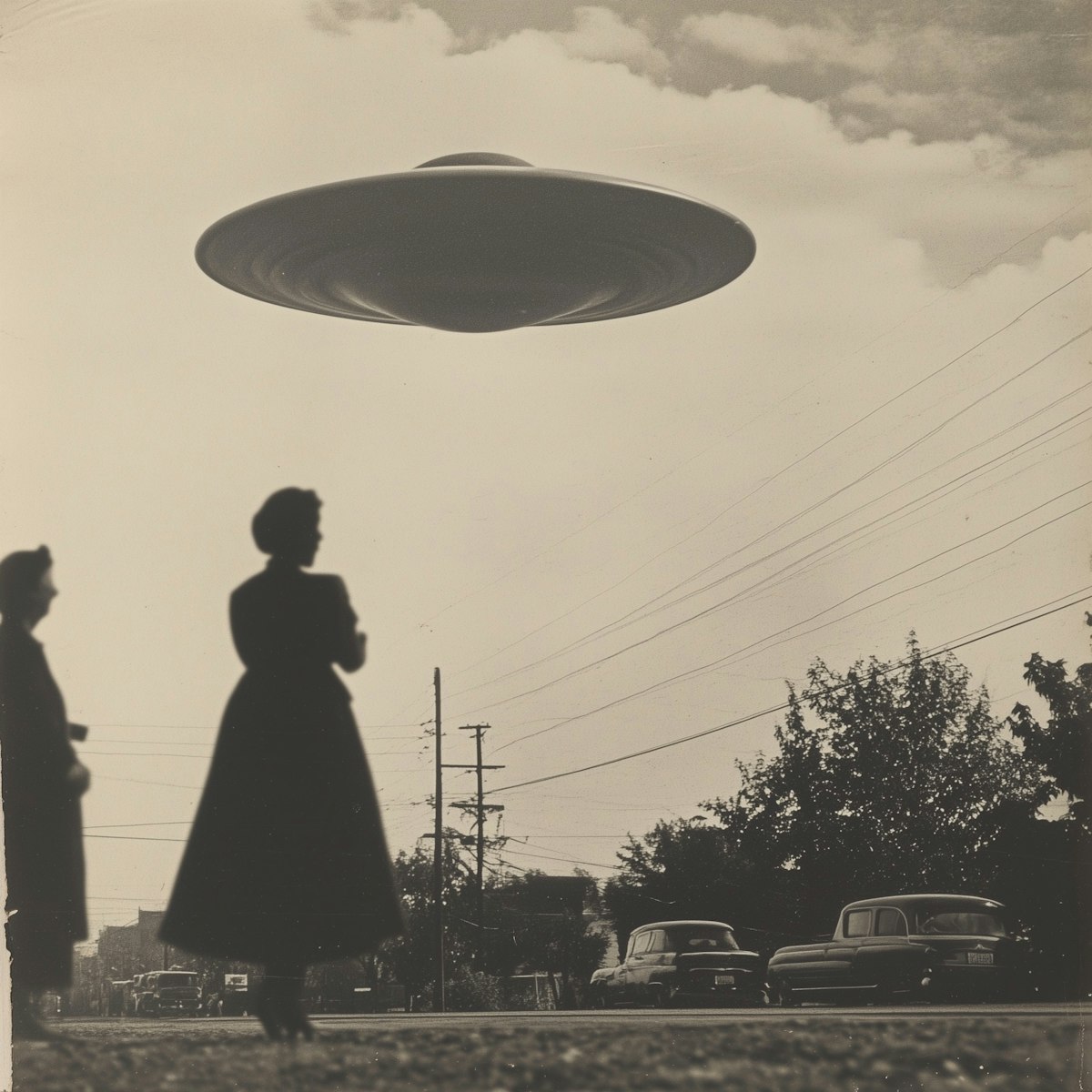
I want to tell you something I have been circling for three years, approaching it from different angles as one approaches a fire — close enough to feel the heat, not so close as to lose the capacity to describe it. I think I am ready now. I think the testimonies have finally accumulated into something that cannot be called coincidence, and I owe it to the people who told me their stories to say plainly what I believe those stories mean.
The grey men stop when you say His name.
Not every time. Not for everyone. But the pattern is there, running through the accounts like a thread of gold through dark cloth, and once you see it you cannot un-see it, and once you cannot un-see it you have to ask: why? Why would a non-human intelligence — one capable of passing through walls, of suspending the autonomic nervous system, of reaching into a sleeping mind and rendering its owner as passive as water — why would such a being recoil from a word spoken by a terrified human being in a darkened bedroom?
Unless the word is not merely a word. Unless it is a name. And unless the name belongs to someone they know.
I will not give you names here — you understand why; these people have shared something sacred and survivable with me, and I will not repay that trust with exposure. What I can tell you is the texture. The consistency. The way the same detail arrives from a retired librarian in Shropshire and a fisherman from Connemara and a schoolteacher from Dunedin who had never heard of each other and never will.
“I said it without thinking. I don’t even go to church. I just said — Jesus. And they stopped. The one nearest me turned its head. And then they were gone.” — Female witness, 54, West Midlands, 2019
The procedure stops. Always the same description of the cessation: not a retreat, not a flight — a stop. As if a signal has been cut. As if an instruction has been countermanded by a higher authority. The small grey figures — and we will come to what they are, and who sends them — become suddenly still, and then they are no longer there. The witness is left in the dark, heart hammering, with a feeling she will describe to me three years later as the aftermath of a near-miss. Something very old, she says. Something that almost happened.
I have seventeen accounts that contain this element, collected over six years. Seventeen is not a statistically significant sample. It is, however, a pattern, and in my experience patterns are where the truth lives before it is ready to be called a fact.
The three in whom the withdrawal was incomplete are, perhaps, the most interesting cases. In each, the witness used the name in the form of an expletive — involuntarily, without intention, without what I can only call the weight of address. The figures slowed. They did not stop. Something in the invocation was necessary but not sufficient. The name works, it seems, when it is directed — when, even in terror, even without theology, the speaker is in some essential sense calling out. Reaching toward something rather than merely emitting sound.
I find this theologically staggering. I find it almost unbearably interesting. I have not slept well since I understood it.
Here I must slow down. Here I must ask you to stay with me, because what I am about to propose is the part I have been most reluctant to write, and the part I am now most certain must be written.
The grey figures are not the architects of the abduction. This much I have believed for some time, and the experiencer literature — if you read it carefully, if you sit with the small details rather than the dramatic ones — keeps returning to this conclusion. The greys are instruments. They are sent. They arrive on a schedule, they perform a procedure, they depart. There is no curiosity in them — or rather, there is a directed curiosity, a curiosity that feels commissioned. They are not there because they want to be. They are there because something told them to go.
And then there are the others. The tall ones. The ones who appear in perhaps one in five abduction accounts, standing at the periphery of the experience, watching. Not performing. Observing. Sometimes communicating — but never in the way the greys communicate, which is a kind of cold telepathic download. The tall ones, when they speak at all, speak in something closer to language. Witnesses report hearing them rather than receiving them. They are present in the way a supervisor is present: they are there to ensure something is done correctly, and they leave when it has been done.
We call them Tall Nordics now. The ufology community settled on this in roughly the 1970s, as though naming them after a Scandinavian phenotype were sufficient. It is not sufficient. It is, in fact, almost comically insufficient — like naming the ocean after the colour of a teacup.
We have been calling them things for a very long time.
I have a theology degree. I want you to hold that in mind for the next few paragraphs, because what I am about to do is not the action of someone who has abandoned rigour. It is the action of someone who has been trained to read very old texts very carefully, and who has noticed something.
The Bene Elohim. The Watchers. The sons of God who looked upon the daughters of men and found them beautiful. The beings of the Book of Enoch — a text the early church fathers knew well and used and then, at a particular moment in ecclesiastical history, decided to stop using. The Irin. The wakeful ones. Described as tall. Described as luminous. Described as beings who existed before humanity and who took an interest in humanity that was not entirely benevolent, and not entirely malevolent, and not entirely anything that a human moral vocabulary is adequate to describe.
The Annunaki of Sumerian record. The Apkallu — the seven sages, half-divine, who came before the flood and taught human beings things they had not known. The Yazata of Zoroastrian tradition, whose name means worthy of worship and who occupied a territory between the divine and the human that their own theology struggled to categorise cleanly.
The Norse Álfar — and not the diminished, decorative fairies of the later tradition, but the high elves of the elder texts, tall and pale and fundamentally alien to human experience, capable of moving between worlds, capable of sickness and of gift and of something that was neither.
The djinn of pre-Islamic Arabia, who are not evil — this is the point almost everyone misses — who are not evil, but who are other, who exist in a register adjacent to humanity without being human, who can be encountered, bargained with, and in certain circumstances commanded, by someone who knows the correct form of address.
Do you see the shape I am drawing?
I do not believe these are different beings. I believe these are different cultures’ encounters with the same beings, recorded across millennia in the vocabulary available to each culture, which is the only vocabulary any culture has ever had. And I believe that what those encounters consistently describe — when you strip away the local mythology, when you look at the bones — is a species, or a class of being, that is ancient beyond our comprehension, that has been present on and around this planet for longer than we have been here to notice, and that is not unified.
This is the part that keeps me awake.
The scriptural tradition is insistent on this. The angels fell. Not all of them — some fell, some did not, and the ones who fell are not a homogeneous category. There are the Nephilim — the fallen, the giants, the ones who came down and refused to go back. There are the Watchers who fell through desire. There are the adversarial intelligences — the accuser, the adversary, the one whose name in Hebrew means the opposer — who did not fall through desire but through a different and perhaps more dangerous failure: pride, or certainty, or the conviction that they understood something better than they had been told. And then there are the ones who neither fell nor stayed — the ones who exist in a grey territory that the tradition has never quite known what to do with, who appear in moments of crisis or transition, who make themselves known at the edges of human experience without fully committing to either side of the ancient division.
The grey area angels.
I did not mean that as a pun when it first occurred to me. I have since decided it is not a pun at all.
The ones the traditions could not categorise were always the most present in human experience. The ones who kept coming back. The ones who could not quite leave us alone.
Consider: the Tall Nordics are encountered with an affect that is cold, purposeful, and inhuman — but not malevolent in the way that abduction experiences, at their worst, are malevolent. They are conducting something. They are overseeing. They appear in the literature as supervisors, as assessors, occasionally as communicants who deliver information the witness cannot understand and cannot forget. This is not the affect of a fallen intelligence bent on harm. This is the affect of an intelligence engaged in a project — ancient, patient, and continuing — whose terms the witness was never given and has never been able to reconstruct from first principles.
And the greys themselves? The small, grey, large-eyed figures who perform the procedure? I have come to believe — and I hold this with appropriate terror — that they are not a species at all. That they are made. That somewhere in the history of this project, which is older than recorded time, the tall luminous ones created instruments for work they did not wish to perform directly. Biological or quasi-biological tools. Present without being present. Agents who carry no authority of their own, which is precisely why a name with sufficient authority can stop them.
A tool does not disobey its owner. But if someone with greater authority than the owner speaks — if the name invoked belongs to a power in whose hierarchy the owner of the tool is subordinate — the tool stops. Not because it chooses to. Because the chain of command has been interrupted at a level above the one that issued the original instruction.
I have asked myself this for three years. I have asked it with the rigour of the counsellor and the precision of the theologian and the honesty of someone who left the ministry because she encountered something that the ministry had no category for, and who has been living in the gap between what she was trained to believe and what she has been shown ever since.
Fourteen of my seventeen witnesses were not practising Christians at the time of their encounter. Several were atheists. One described herself as actively hostile to organised religion. The name arrived in them unbidden — it did not come from faith, or from habit, or from a childhood prayer remembered under stress. Several have told me, with the specific discomfort of someone reporting something they cannot explain, that the name did not feel like it came from them. That they heard themselves say it and did not know, in the moment, where it had come from.
I am a theologian. I know what the tradition says about this. I am going to say it plainly, without apology, and let you do with it what you will.
The tradition says that the name is not merely a label. That it carries — is — something operative. That there is a power in it that does not depend on the faith of the person speaking it. The tradition says, in fact, that the demonic — the oppositional, the fallen, the adversarial — is not in the least impressed by human faith or human virtue. What it responds to is authority. And the name it cannot override belongs to the one in whose name, according to the oldest Christological documents, every knee shall bow — of things in heaven, and things in earth, and things under the earth.
Things in heaven.
That has always been an unusual inclusion. You do not typically command beings of heaven to bow before a heavenly authority — unless some of them had, at some point, stopped doing so of their own accord.
I am left with this: a class of beings, ancient and divided, who have been present in human experience since before we had language to describe them, and who have left their fingerprints on every major religious and mythological tradition on this earth — not because they inspired those traditions as benevolent guides, but because those traditions were attempts to describe them, to contain them, to negotiate with them, and in some cases to appeal to a power above them when negotiation failed.
I am left with the testimony of a retired librarian from Shropshire who does not go to church, who said a name in her bedroom at three in the morning, and who sat in my front room two years later and told me that in the moment she said it she felt — and this is her word, exactly as she gave it to me, and I would not change it for anything — she felt covered.
As though something stepped in front of her.
As though the name she called was heard by something that was already close, and moved closer.
I have been a theologian. I have been a curate. I have sat with dying people and grieving people and people who have survived things that should not be survived. I know what human beings reach for in extremity. I know the difference between the psychology of crisis and the testimony of encounter.
She was not reaching. She was answered.
I believe that the tall luminous ones — the Watchers, the Nordics, the Annunaki, the beings the Zoroastrian tradition called the Ahuras in their unfallen state and the Daevas in their fallen one — are a fractured company, some of whom have been conducting this project for reasons of their own for a very long time. I believe the greys are their instruments. And I believe that the name which stops those instruments belongs to the one authority in the entire architecture of this ancient division that all parties to it, without exception, are required to recognise.
Even the fallen ones.
Even the grey area ones.
Even the ones who have spent ten thousand years convincing themselves otherwise.
There is a reason that every tradition that has ever encountered these beings has also, in some form, developed a practice of invocation against them. There is a reason that the practice converges, across traditions that never knew each other, on the same fundamental structure: a name, spoken directly, with the weight of address. A call placed upward, to the authority above the authority that sent the intruder.
The lines are open. They have always been open.
She just didn’t know, until the moment she needed to, that she had the number.
Editor’s note: This piece was submitted at 4:17am. Sister Agnes has been asked to rest. She has declined. She says she is fine. We believe her, mostly. — M. Thorne, Editor-in-Chief
Leave a Reply